One Shader Advances An Entire Field
WebGL presents a graphics pipeline, and its programmable fragment stage can evaluate the same local rule across a rectangular data field. Textures hold input state, a framebuffer texture receives output, and one draw call invokes the fragment shader at every destination.
Stateful computation alternates between two fields. The shader reads one texture and writes the other, then JavaScript swaps their roles. A separate display shader translates packed machine state into visible marks while the update shader stays focused on computation.
The cellular automata use packed RGBA state, neighbor reads, one active update function, a swap texture, and a display pass. Cartilage extends that pattern with routing, constants, MUX roles, ports, region ownership, and circuit installation.
Every Layer Stays Visible
Keeping the implementation direct makes the browser-to-GPU interface part of the lesson. Readers can follow the calls that allocate, compile, bind, execute, swap, and read without losing the machine beneath a library.
Five Routes Into Browser Computation
Run GPU Code With Raw WebGL And GLSL
Create the browser context, compile and link GLSL source, issue a draw, and produce a visible result. Sequentially runnable code blocks keep every step close to its effect.
WebGL GPGPU Scaffolding
The support structure around a compute shader: capabilities, textures, buffers, programs, framebuffers, and the JavaScript control path.
 3 · Stateful machines
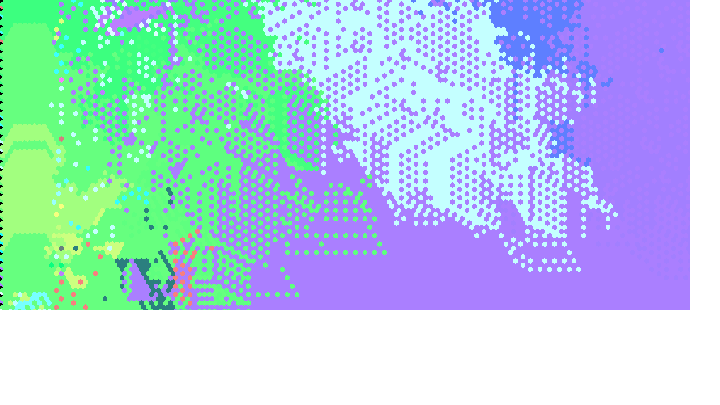
Browser/GPU Cellular Automata
Local symbol routing, six-neighbor reads, packed state, ping-pong updates, and separate display logic across the 2019–2021 machines.
 4 · Reconfigurable fabric
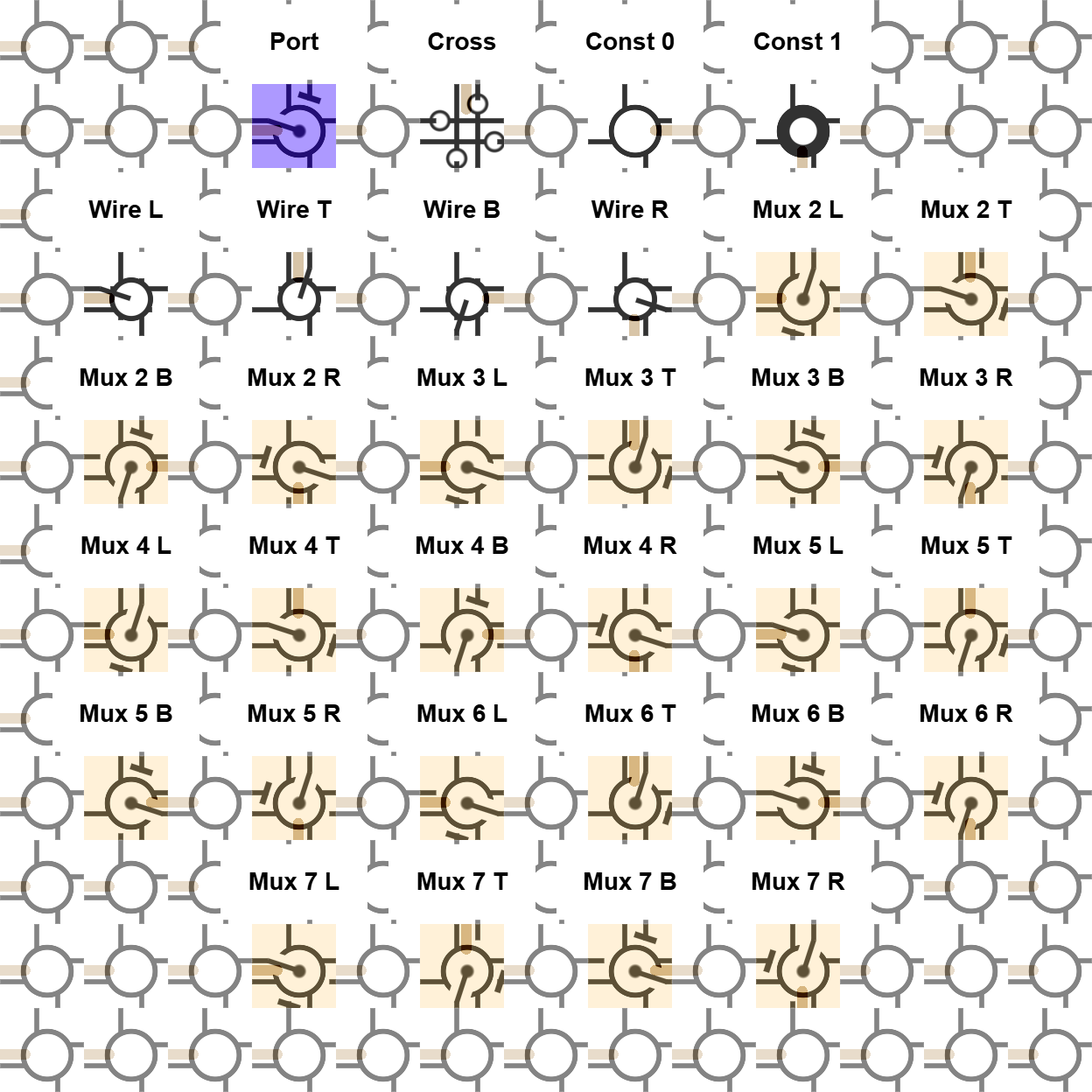
Runtime Instantiation In Adjacent Space
Local ports, parent pointers, serial configuration streams, and replaceable tile roles let one region install another inside the browser GPU field.
Choose the editor, wire tracing, ownership, recovery, or simulator package and build it with Brian.
 5 · Browser to hardware model
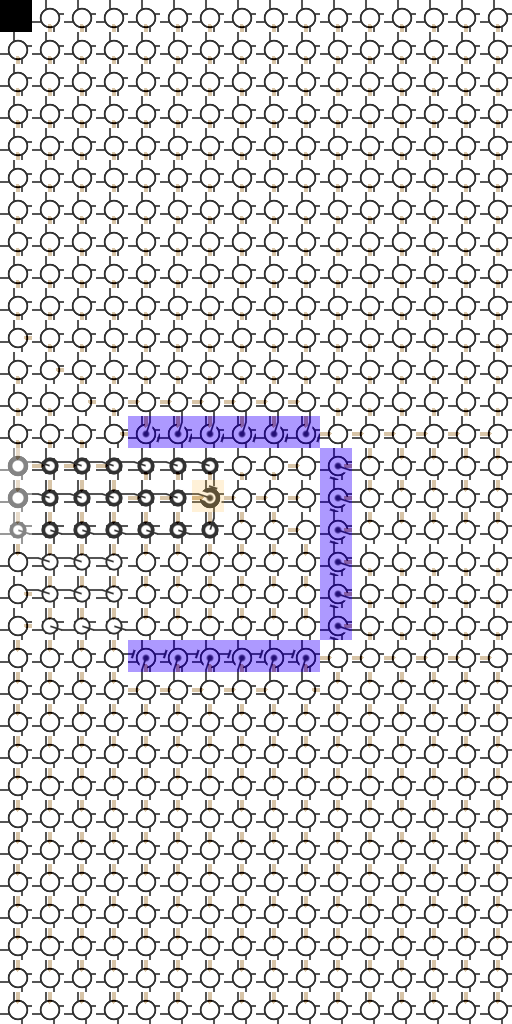
Cartilage Core
A compact WebGL1 fabric and an independent SystemVerilog implementation accept the same exact 252-bit installation; a self-checking Verilator testbench exercises the RTL.
 Context · History
Programmable Shaders Before AI Hardware
Follow programmable parallel computation from RenderMan-style shading through real-time languages, Brook, CUDA, AlexNet, and matrix engines.
The Machine Travels With Its Explanation
An ordinary browser can carry the control code, shader code, input state, display, and explanation together. A reader opens the page, watches the machine move, and inspects its source through familiar developer tools.
That portability suits architectures whose state has a spatial meaning. In Cartilage Core, the browser advances a texture ping-pong simulation one host step at a time. The SystemVerilog model uses a continuous combinational application plane and locally routed configuration-clock edges. The same installation makes their different execution models immediately comparable.
From WebGL1 Toward New Spatial Machines
The direct WebGL1 and GLSL ES 1.00 implementations establish a long, executable line of local-state computation. They make the machinery clear enough to teach, modify, and carry into new browser or native GPU systems.
WebGPU and native GLES can extend the same architecture with modern storage, compute, and deployment paths. Cartilage provides the deeper opportunity: use those capabilities to build a visual workstation where computation can create and reconfigure neighboring computation.