Fund a defined package
Deliver One Named Milestone
Support a renderer, protocol, persistence, recovery, or lesson package with its runnable result specified in advance.
Twenty-eight concrete engineering packages turn Cartilage into a readable, controllable, resilient, shareable, and teachable spatial circuit workstation.
Cartilage already exposes local Boolean roles, routing, ownership, and configuration. This program adds a disciplined component renderer, complete net tracing, a region-scale configuration interface, single-writer sharing, closed-contour recovery, durable browser projects, and lessons that operate the real fabric.
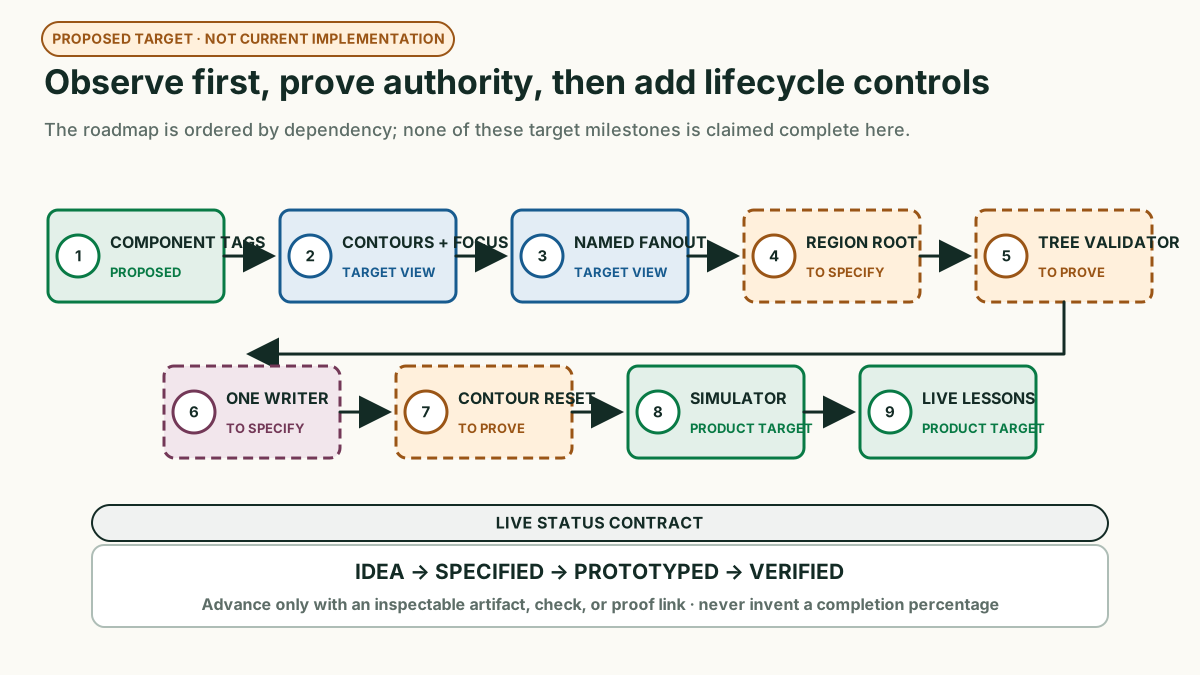
The build order moves from visibility to regional authority, recovery, persistence, and teaching so every later capability rests on a workstation an engineer can inspect and control.
Current foundation: Cartilage Core serially installs one exact 6×6 child region, while the MUX visual edition runs already placed application circuits.
Twenty-eight-part build program: the diagrams specify the target mechanisms and interactions for each named work package.
Roadmap engine: Cartilage Core 48ff6e0.
0/28 complete
28 named engine packages form the current build program.
Planned identifies a named engineering package.
Active links that package to an implementation branch or issue.
Complete joins merged code with a repeatable run and a public capture or report.
Program review: .
Cartilage Core publishes a local WebGL1/GLSL transition, independent SystemVerilog, and one 6×6 image streamed as 252 payload bits plus one apply pulse. The installed region realizes an interior-MUX AND circuit.
MUX Algebra supplies 34 one-to-one abstract and Cartilage views with 606 shader-readback cases across already placed and routed circuits. A general placer/router and a serial installer for the wider catalog form separate packages in this program.
The live nested-instantiation fabric establishes the composition model: a parent, a local port, a bounded daughter region, and roles rewritten through the fabric.
Readable components, named nets, and step controls give engineers the instruments needed to develop ownership and recovery protocols. Deterministic regional claiming then supplies authority for shared objects and contour recovery. Hosting and lessons expose the same engine as a product and teaching system.
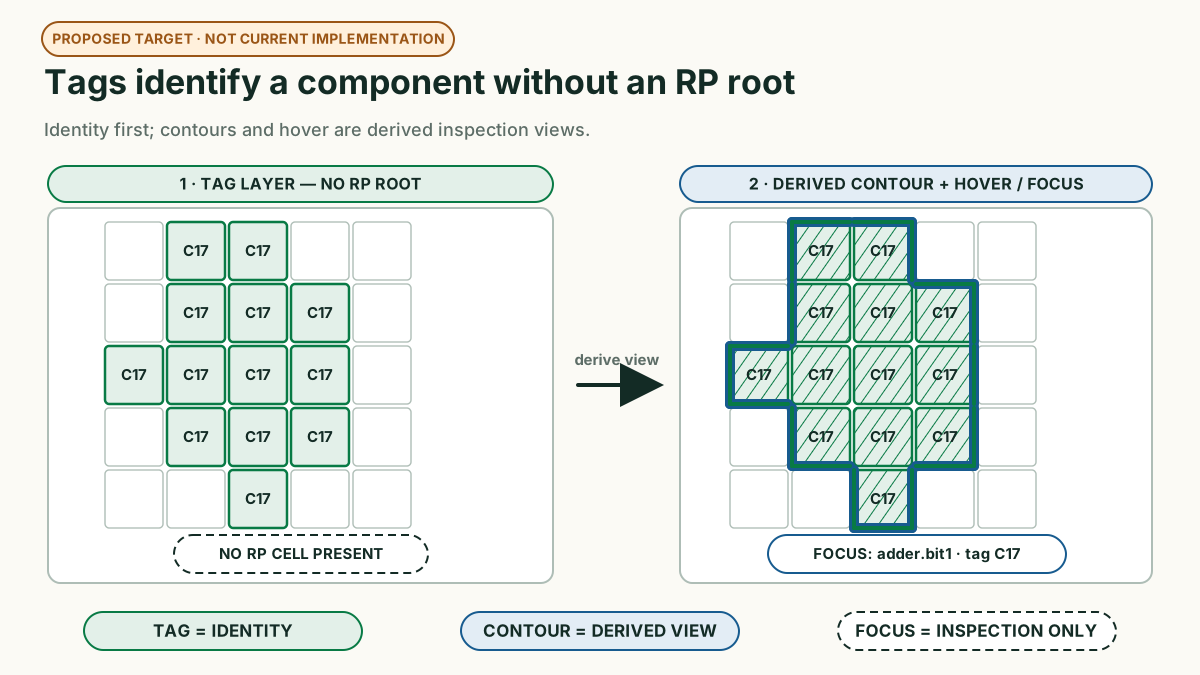
The first workstation release turns author-defined component structure into visible blocks, ports, routes, and selectable nets while keeping regional ownership independent.
A defining block attaches a stable non-reconfigurable component tag to every cell in its subtree. The tag supplies display and authoring metadata while the continuous ownership tree and its writer authority remain unchanged. From tag membership, the renderer derives block backgrounds, exact contours, hover and focus states, labels, and inspection data.
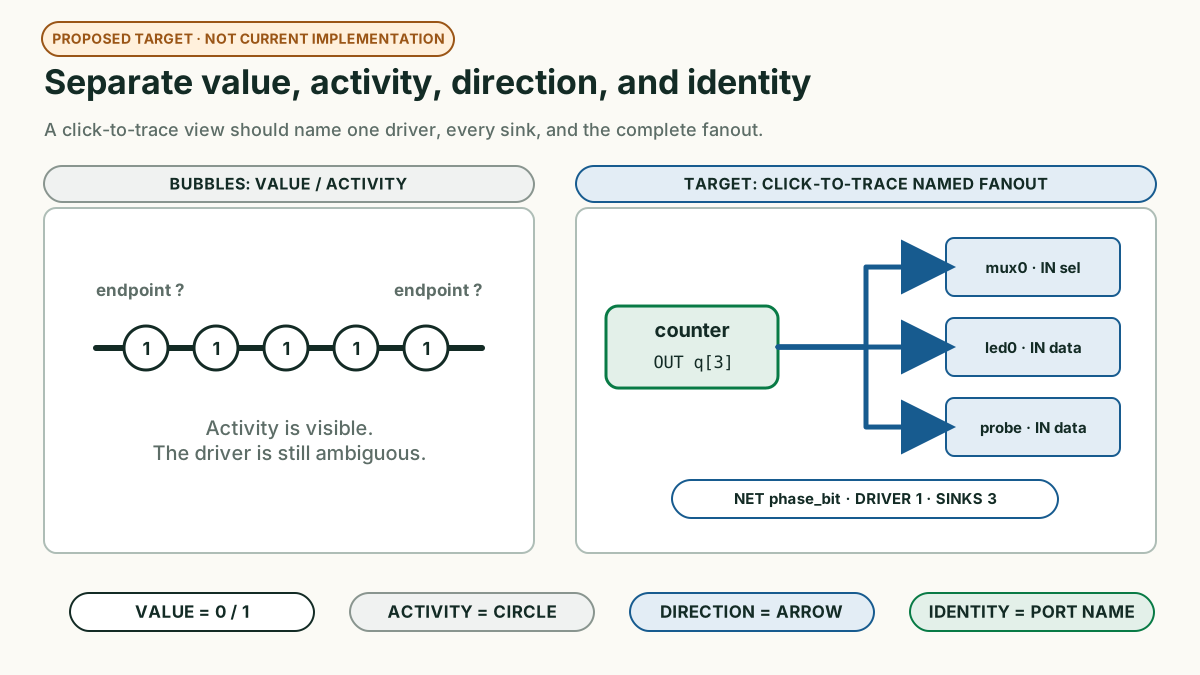
A continuous-line mode turns each unbranched net into one readable route. Static arrowheads show direction during pause, print, and reduced motion; optional slow interframes expose the modeled propagation order. Selecting any segment reveals the complete named net, its single driver, every branch and sink, and each component contour it crosses.
Completion test: Stable membership survives placement and simulation, and every parent chain retains its original path.
Completion test: Selection reveals the block name, cells, ports, and runtime state while every signal remains visible.
Completion test: Adjacent blocks share one readable seam, and nested blocks keep distinct hit targets.
Completion test: One route remains legible in overview and close inspection with no cell-by-cell bubble chain.
Completion test: One recorded step sequence produces the same visible order on every replay and labels that order as modeled time.
Completion test: A one-driver, three-sink circuit identifies exactly those endpoints and excludes a crossing with no junction.
Completion test: Labels clear the fabric marks, follow rerouted nets, and survive save and reload.
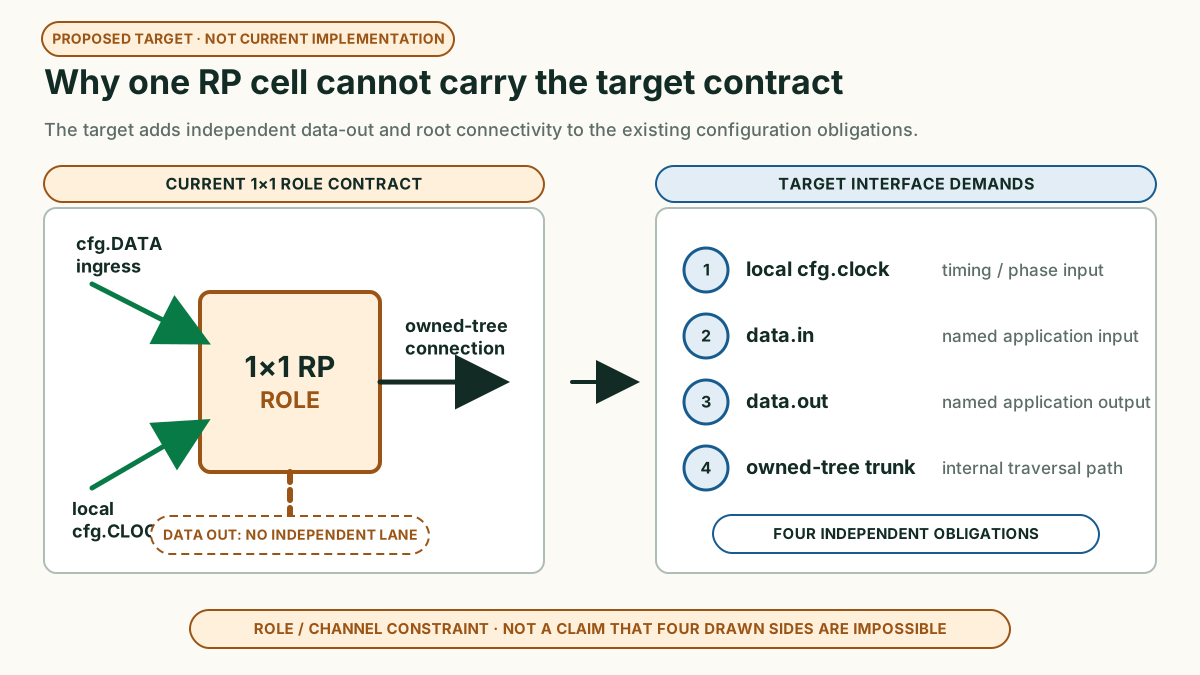
A practical region root needs enough physical capacity for configuration clock, data in, data out, and its ownership-tree connection.
One logical root can occupy several physical cells or lanes while presenting independent configuration clock, data-in, data-out, and ownership-tree channels. Measurement across supported orientations will determine the minimum footprint; the 2×2 diagram supplies the first candidate geometry.
The reviewed transition rotates a cell’s parent direction while it searches for a live configuration signal. The roadmap replaces open-ended search with an explicit claimable power-on image and an ordered spanning-tree wavefront whose edge arbitration and child order produce the same region on every run.
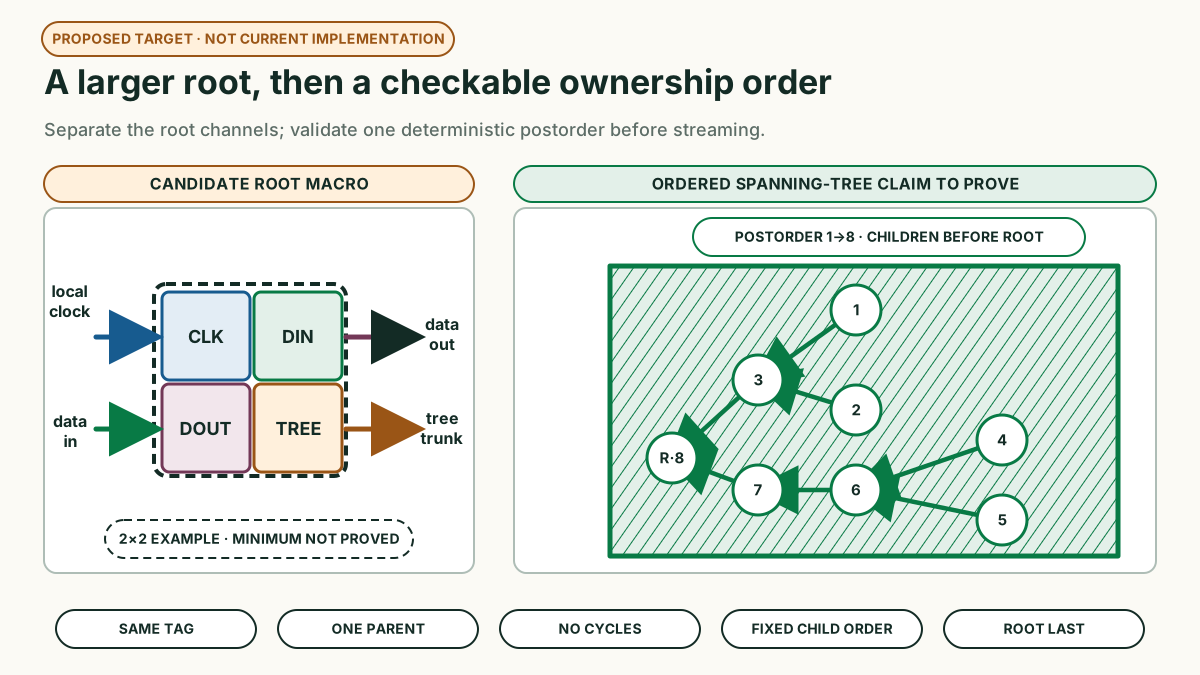
Completion test: Every channel drives and reads independently through all supported orientations.
Completion test: Repeated full resets produce one state hash, and every cell exits parent search.
Completion test: Every parent chain reaches one root, each cell appears once, and repeated runs emit one visit order.
Completion test: One trace records the claim, deterministic load, returned output, and every cell attached to the root.
Several surrounding objects can reference and manage one shared object while a single writer capability keeps mutation deterministic.
Ownership overlap places logical containment and shared application references above a physical ownership forest. In the 4×4 circuit, every non-root cell keeps exactly one adjacent parent, while exactly one surrounding block holds the current writer capability.
A passable ownership pointer moves that unique mutation authority through an ordered handoff: fence the old writer, acknowledge the new generation, reject stale pointers, and release the old capability.
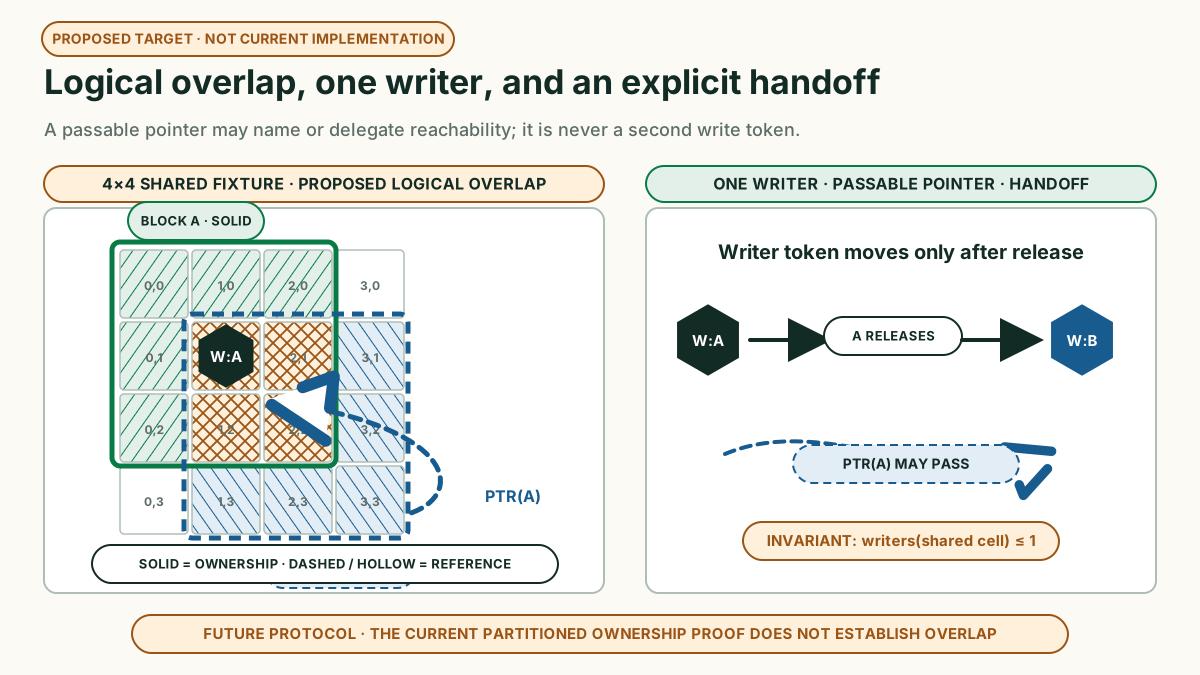
physical parents per non-root cell = 1
active writers per mutable shared object ≤ 1
writer transfer = fence → acknowledge → generation change → release
Completion test: The inspector displays both graphs, and every physical parent walk reaches exactly one root.
Completion test: Exactly one of two competing writes commits, and the object rejects every stale generation.
Completion test: Exactly one writer exists before and after the handoff, and every interrupted step follows a deterministic recovery path.
4×4 shared-object circuit. Surround one subfabric with four blocks and pass the writer among them.PlannedCompletion test: The traversal visits all 16 cells once, reader removal and writer transfer preserve the object, and the overlay names every relationship.
A closed-contour serial token gives surrounding owners a bounded way to recover a self-pointing or cyclic island from outside that island.
The roadmap’s sequential serial kill pill travels as a bounded reset token rather than a global clear. One surrounding owner can establish and inject through a complete perimeter; several surrounding owners collaborate on one ordered transaction.
The token traverses the perimeter and returns to its injection point before it authorizes the enclosed reset. The subfabric then receives the same explicit claimable image as power-on. Open, branched, duplicated, or incomplete contours abort the transaction before any cell changes.
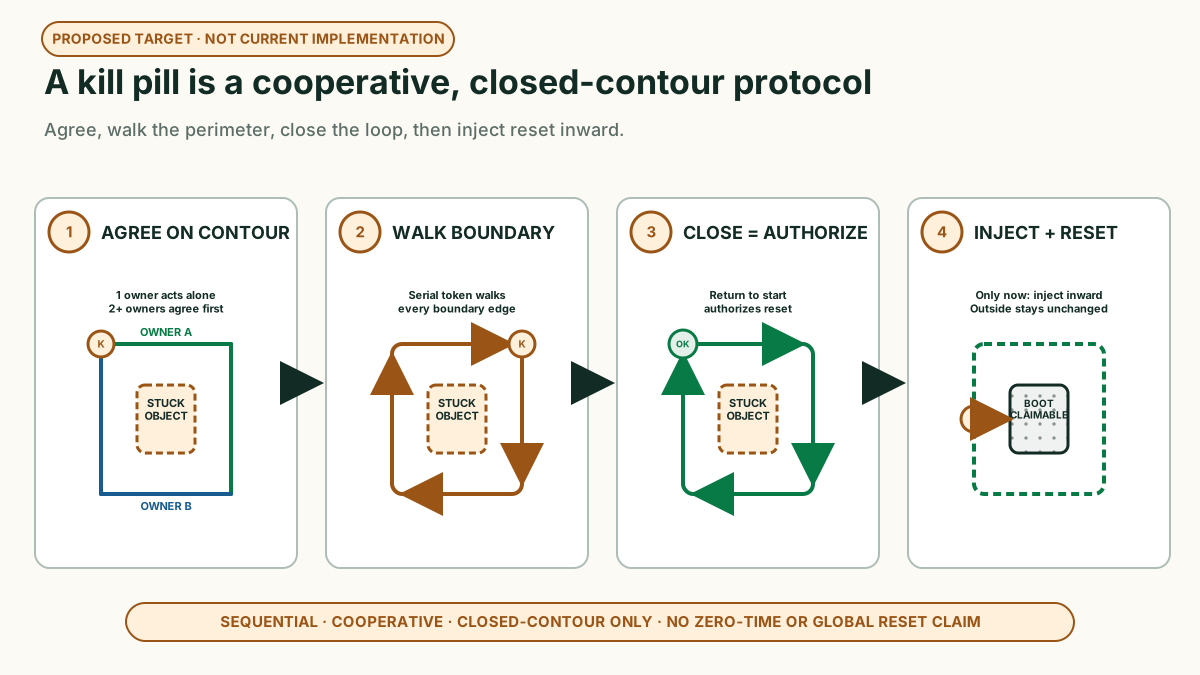
Completion test: The detector separates injected stuck circuits from live transactions that continue to make progress.
Completion test: Ordinary configuration traffic and stale generations never initiate a reset.
Completion test: The token visits each perimeter segment once, while open and branched contours stop before reset.
Completion test: One-, two-, and four-participant circuits agree on one generation or stop with every enclosed cell unchanged.
Completion test: The reset hash matches a fresh power-on instance, and every cell outside the contour retains its state.
Direct controls and durable project state make the simulator usable, while the host drives, observes, serializes, and publishes the same fabric semantics.
Play, pause, single-step, and speed controls govern both engine state and propagation view. Saving keeps the editable source project distinct from an optional runtime checkpoint. Static hosting publishes the application, while an authenticated project service adds versions, permissions, quotas, and conflict-safe writes.
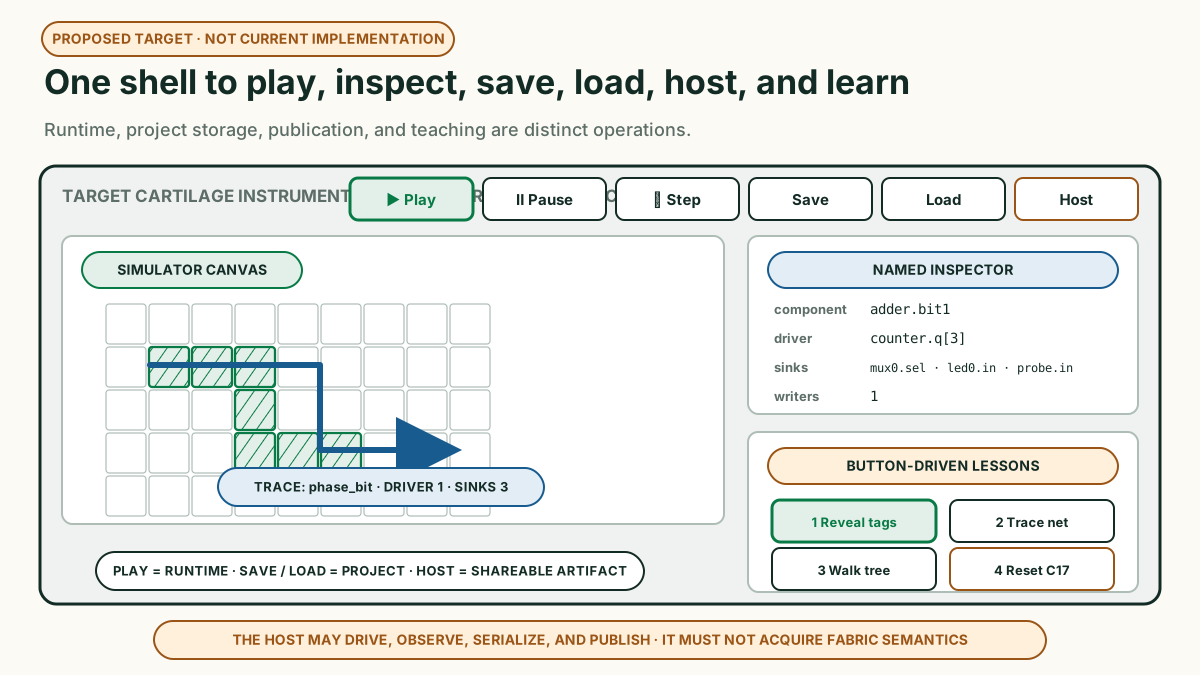
Completion test: Pause holds one checksum, and checkpoint replay yields the same sequence of state hashes.
Completion test: Save-load-save preserves every block, net, port, ownership, annotation, and machine-state identity.
Completion test: A clean HTTPS session opens the shared project, and the service rejects unauthorized or stale writes.
Completion test: Rerouting and reopening preserve each named object across screen-geometry changes.
A reader presses one button and watches the engine inject a signal, trace a net, claim a region, transfer authority, or recover an object.
Every lesson starts from a deterministic engine snapshot, triggers one visible action, and reads one machine result. The sequence begins with constants, wires, a MUX, fanout, names, and ports, then advances through state, composition, regional reconfiguration, writer transfer, and closed-contour recovery.
Completion test: A fresh browser runs the lesson through visible controls and the live engine.
Completion test: Each action produces one named state transition and one engine-state result.
Completion test: The public sequence includes dynamic regional behavior beyond conventional gate lessons.
Completion test: Automated playback reaches every expected checkpoint, and back or reset starts each lesson from its own state.
The workstation release combines Cartilage design, simulation, debugging, and teaching in one browser workflow, then extends that workflow through spatial ownership and runtime regional replacement.
The complete release lets a user:
The 28 packages on this page form the implementation path into that release. A separate interoperability package can add tested file-level .circ compatibility.
The Cartilage workstation program offers bounded packages across GLSL rendering, Web UI, protocols, persistence, fault recovery, verification, hosting, accessibility, and curriculum design.
Fund a defined package
Support a renderer, protocol, persistence, recovery, or lesson package with its runnable result specified in advance.
Contribute engineering
Implement one task ID, construct its circuit, and make the result repeatable across browser and hardware-model layers.
Review, stress, and teach
Architecture review, fault injection, accessibility work, curriculum design, classroom pilots, and server infrastructure turn the spatial system into a widely usable engineering environment.
Choose a Cartilage work package with Brian Greenforest
Every contribution attaches to a task ID, implementation branch, repeatable run, and public result so collaborators can see exactly what their work unlocks.
Try Cartilage: Run the open one-slot multiplier.
To edit, load, save, share, and follow the browser, Raspberry Pi, and FPGA streaming work, request the private demo username and password on LinkedIn.