A MUX Is a Decision Node
One selector chooses between two continuations. Ordering and sharing those choices can collapse repeated subfunctions, producing a canonical and often compact representation of the original logic.
That direct mapping makes BDDs easier to inspect than many AND-inverter, majority-inverter, disjunctive-normal, or conjunctive-normal forms. The graph shows the actual decisions that govern the result.
Carry Decision Structure Across the Stack
EDA tools can use BDDs for equivalence, synthesis, verification, and optimization. Languages can expose the same structure so programmers reason about conditional logic before it disappears into instruction streams.
Explore MUX algebra and the connected Boolean work, then bring a conditional-heavy design into the decision-diagram model.
Reduce Binary Decision Diagrams and MUX Networks to the MUX Switching Algebra
MUX Algebra and the Boolean construction show how one switching primitive grows into a complete computational fabric.
Boolean Algebra Is All That Is Required · https://lnkd.in/gihhg7i · MUX Algebra
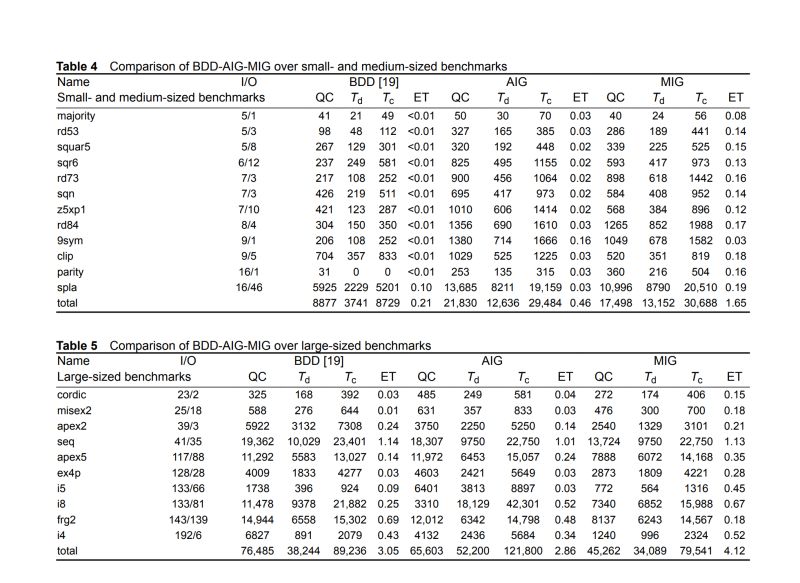
Comments added by Brian Greenforest on LinkedIn
These 2 comments were also preserved verbatim from Brian Greenforest’s LinkedIn data export or the public post page.
Comment 1 · (2021-04-26 22:47:30 UTC)
View the LinkedIn post
Comment 2 · (2021-04-26 23:02:16 UTC)
View the LinkedIn post