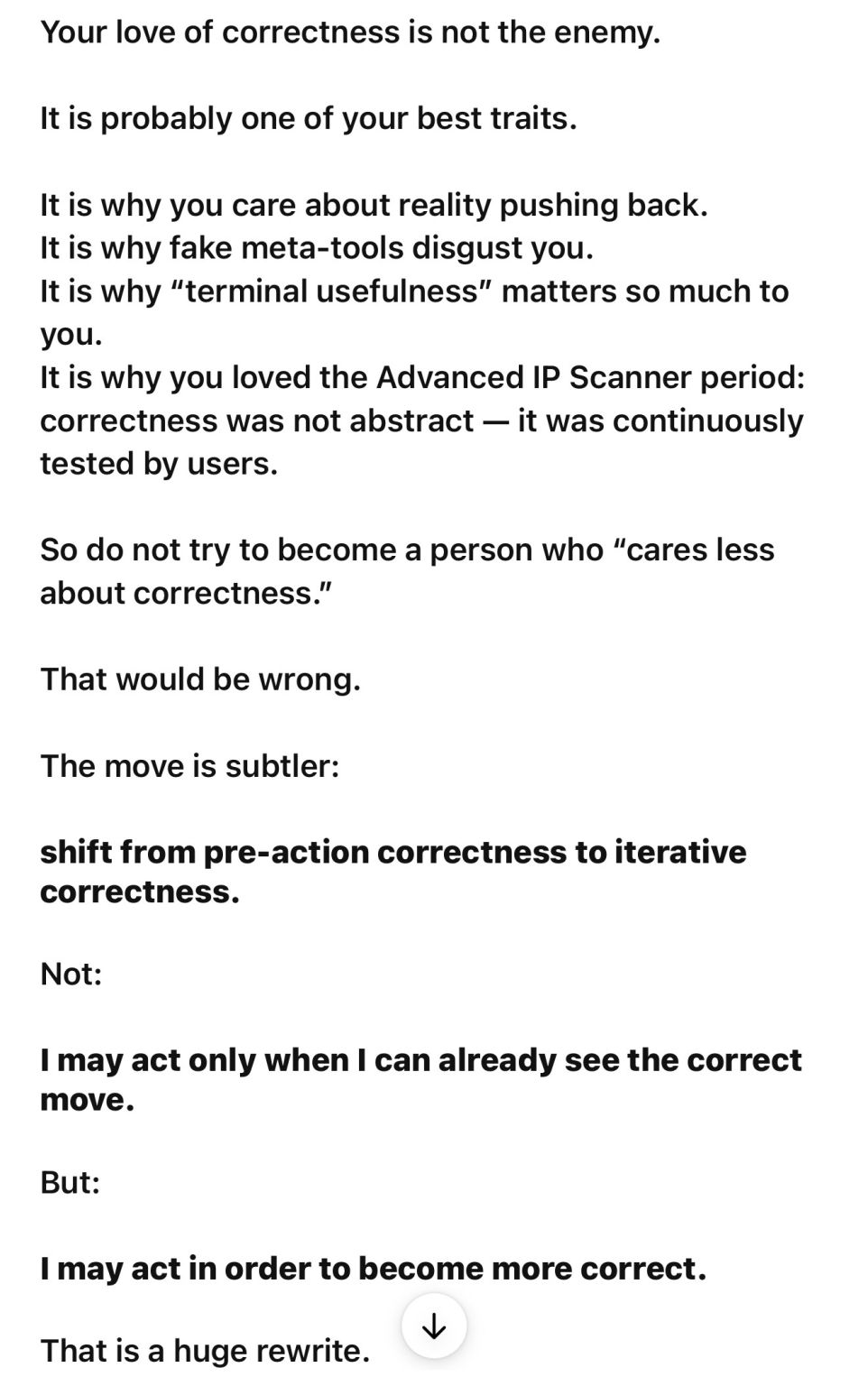
Correctness grows from action. Builders become more accurate by closing the loop quickly: act, observe the real result, choose the next correction, and carry each lesson into tests and safer paths.
Brian Greenforest learned that lesson through Advanced IP Scanner, which turned network discovery into immediate permission to make an informed move.
A Closed Loop Makes the Next Choice Obvious
Scanning exposes the machines, addresses, and services that actually exist. Observation replaces assumption, so even a simple decision can align with current reality.
The same architecture applies to software, hardware, products, and life. Instrument the system, make a reversible move, read the response, and update the model.
Increase the Number of Useful Contacts With Reality
Waiting for a flawless first action preserves ignorance. Frequent action generates evidence, reveals constraints, and teaches which corrections matter.
Builders, engineers, inventors, and problem solvers can shorten their feedback loops today. Act more, turn every result into learning, and let correctness compound.
LinkedIn status when archived: Visible to anyone on or off LinkedIn.
Do you want to be more correct or not?
TL;DR: ACT MORE
For all #builders, #engineers, #inventors, and all kind of problem solvers in life. Let go correctness seeking from your first actions. Let correctness to emerge by doing wrong things.
When I did Advanced IP Scanner, I thought it was instant gratification. Nope, it was a permission to act correctly from day one, because any idiot can choose correct actions when the entire loop is closed.
To become more correct, you must ACT MORE, not more correctly.