Movies Made Floating-Point Throughput Visible
Catmull’s work on z-buffering and texture mapping helped establish computational graphics. The Lucasfilm Graphics Group and later Pixar turned physically rich images into a production workload, while RenderMan gave artists a programmable description of surfaces and light.
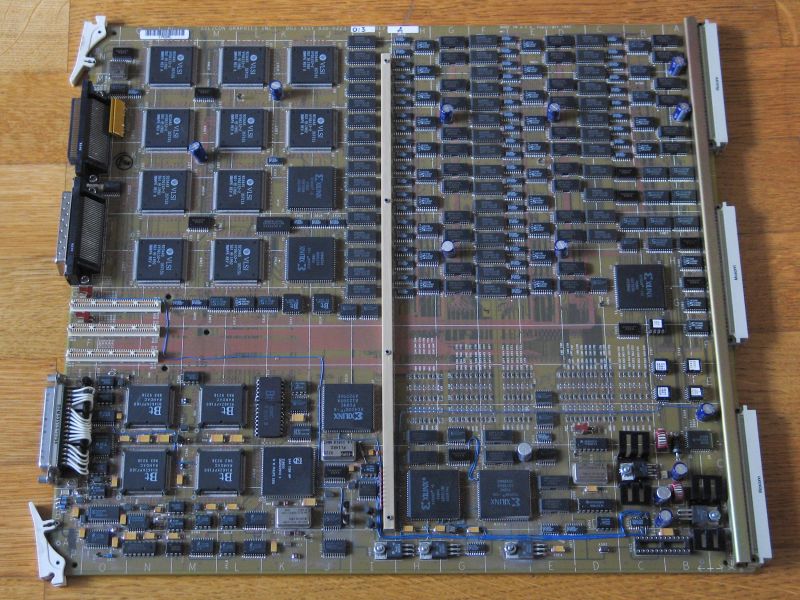
DEC and SGI workstations, custom ASIC suppliers, and specialized geometry and raster hardware advanced around that demand. The history reflects an industry-wide convergence rather than one corporate handoff.
Shaders Carried the Arithmetic Into AI
Programmable GPU stages turned graphics hardware into a general platform for regular parallel math. Inigo Quilez helped spread fragment-shader thinking through Pixar work and ShaderToy, making spatial kernels available to a global creative community.
AlexNet’s 2012 GPU training demonstrated how well the same throughput architecture fit neural networks. Graphics and AI now share a hardware center of gravity: FMA arrays, memory bandwidth, programmable kernels, and relentless scale.
Trace Floating-Point Hardware From RenderMan to AI
The linked hardware history follows FMA-heavy rendering through programmable shaders and into modern AI accelerators.
The Shader Before the Programmable GPU: RenderMan, Graphics, and AI Hardware · Cheap Pixelless Textures With 2D SDFs · Why Open-Sourcing ASIC FMA Is Hard
Comments added by Brian Greenforest on LinkedIn
These 2 comments were also preserved verbatim from Brian Greenforest’s LinkedIn data export or the public post page.
Comment 1 · (2025-06-29 03:22:10 UTC)
View the LinkedIn post
Comment 2 · (2025-07-11 15:27:20 UTC)
View the LinkedIn post