ShaderToy gave Brian Greenforest a new medium for inventing chips: write circuit behavior as a massively parallel GLSL kernel and watch the entire spatial system evolve in the browser.
That 2019 shift connected ASIC simulation, signed-distance fields, GPU computation, and decades of 2D and 3D interface work in one immediate visual loop.
Think in Parallel Pixels and Cells
A fragment shader evaluates many locations together. The same execution model fits cellular automata, reconfigurable fabrics, local signal propagation, and spatial control structures.
Signed-distance fields add a compact language for geometry, while interactive rendering exposes state and relationships that a conventional waveform may hide.
Turn the Browser Into a Hardware Laboratory
GLSL kernels share the massively parallel structure behind CUDA and modern accelerator research. ShaderToy adds instant distribution, iteration, and a community that can inspect the result.
Hardware designers, GPU programmers, and interface builders can use this path to visualize a new fabric, teach its behavior, or explore an ASIC architecture before committing to silicon.
LinkedIn status when archived: Visible to anyone on or off LinkedIn.
Joining the amazig ShaderToy community, learning how to use SDF, and writing all my next ASIC circuit simulators in GLSL instead of Verilog since 2019 was the biggest "aha!" moment in my scalable parallel compute and 2D/3D UI career. Turns out, it's the bleeding edge I've started to use back then, 4 years ago, long before it becamr mainstream.
Interestingly enough, I missed the bleeding edge train of Attention, Transformers, LLM, GPT back then, but what I effectively was doin was thinking in parallel, and writing massively scalable GPGPU compute kernels aka CUDA or the bleeding-edge developments from Microsoft and OpenAI.
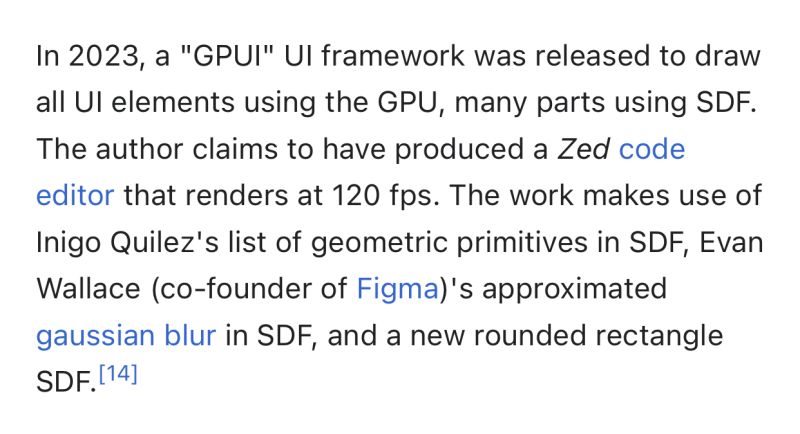
Comments added by Brian Greenforest on LinkedIn
These 2 comments were also preserved verbatim from Brian Greenforest’s LinkedIn data export or the public post page.
Comment 1 · (2023-06-23 18:58:28 UTC)
View the LinkedIn post
Comment 2 · (2023-06-23 18:59:01 UTC)
View the LinkedIn post