Induction, Deduction, Abduction, and ML
January 18, 2022
Human intelligence does more than predict patterns or apply rules. It forms educated guesses that open a new line of explanation, and that abductive leap defines one of the most important frontiers in machine intelligence.
Brian Greenforest connects Erik Larson’s critique of artificial intelligence with induction, deduction, evolution, quantum interpretation, living cells, and the distinctly human power to choose a promising hypothesis.
Three Engines of Thought
Induction generalizes from examples: repeated white swans support an expectation about the next swan. Deduction applies explicit logic: one black swan defeats a universal statement. Abduction proposes the explanation worth testing when neither examples nor rules determine the next move.
Machine learning excels at induction, and Boolean systems execute deduction with precision. Abduction supplies the creative move that selects a fruitful model from a vast field of possibilities.
Build for Discovery, Not Prediction Alone
Larson’s work makes the human act of hypothesis formation central to the AI conversation. Brian extends that inquiry toward quantum computation, Federico Faggin’s work, and research with living neural systems such as Cortical Labs.
Researchers building intelligent systems can treat abduction as a first-class design problem. Study how people form meaningful guesses, connect that process to physical systems, and create tools that amplify human thought.
Test Abduction Against the AI Argument
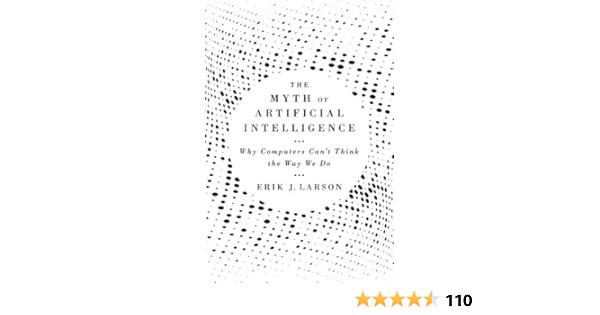
Erik Larson’s work supplies the linked case for abduction as a central form of reasoning that pattern-learning systems must address.
LinkedIn status when archived: Visible to anyone on or off LinkedIn.
Erik J. Larson did a big deal of a deep reinforcement learning work for DARPA span over a several decades.
He found, that humans somehow are capable of making "educated guesses" that are too lucky, probabilities concerned.
ML works great to execute "induction": to predict that "all swans are white".
Boolean logic works great to execute "deduction": ("when found a black swan, apply a Bayesian probability update to the inductive engine.")
We can try to explain the hard problem of consciousness by evolution: a natural selection of those agents, who survived by making multiple "right choices," and ended up on the "lucky" branches (in the sense of the "many-worlds" interpretation of quantum mechanics).
Larson uses the term "abduction", to define the key mechanism people use to make these lucky guesses. In his book, he elaborates on why it is important to be human, and to believe in the importance of the way we THINK. He's an expert in machine learning, and understands EXACTLY, why we can't build AGI yet.
Perspective directions can be found in quantum computing (Federico Faggin) and real living cells (Cortical Labs.)
Enjoy the deeply intriguing, touching, and life changing read:
https://lnkd.in/gS3__ha